

TL;DR:
- AI for regulatory compliance automates complex research, obligation mapping, and continuous monitoring, transforming how organizations manage legal obligations at unprecedented speeds. These platforms offer traceability, multi-jurisdiction coverage, and hybrid arbitration to ensure audit readiness and regulatory adherence across diverse environments. Embedding continuous oversight and integrated workflows is essential for compliance teams striving to meet evolving legal, ethical, and security standards in AI deployment.
AI for regulatory compliance is defined as the use of specialized artificial intelligence platforms that automate regulatory research, risk classification, obligation mapping, and continuous monitoring to replace manual processes in compliance programs. Platforms like ComplianceOS, Aiella, Sherlocq, and Reg(AI)ntel represent the current generation of regulatory technology AI, each purpose-built to handle the scale and complexity that human teams cannot match alone. Where a compliance officer once spent days parsing a single regulatory framework, these tools operate in seconds. The shift is not incremental. It is a fundamental change in how legal and compliance teams manage their obligations, and organizations that have not yet evaluated AI compliance solutions are already falling behind their peers.
How AI platforms accelerate regulatory research and obligation mapping
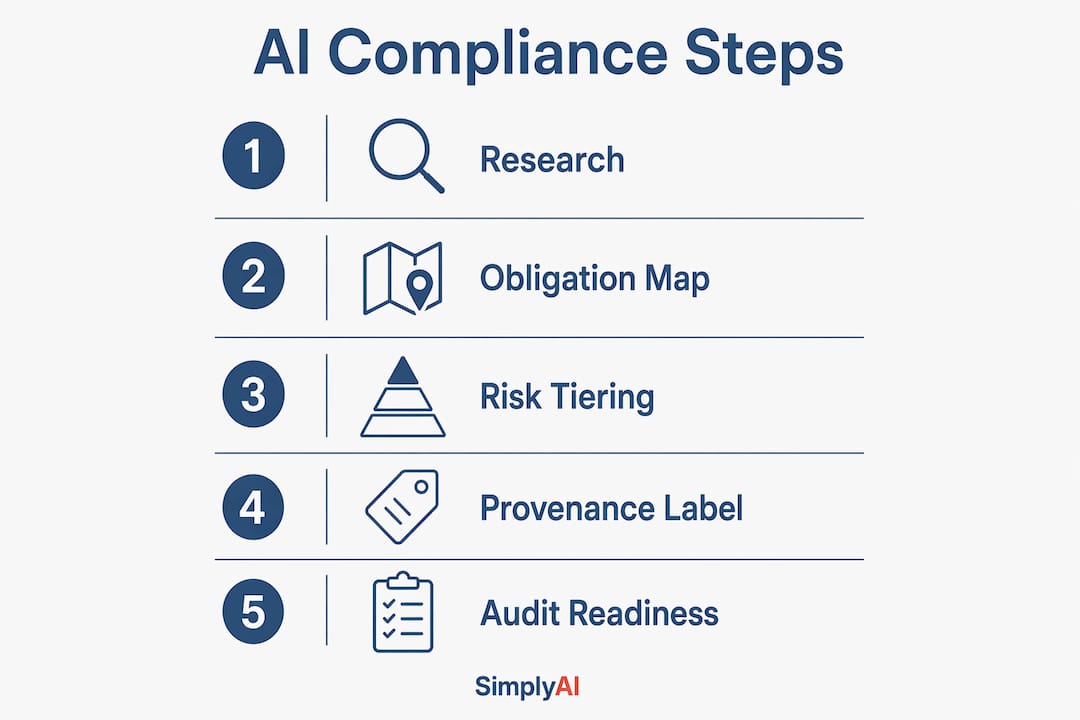
AI for regulatory compliance works by applying natural language processing (NLP) to legal texts, extracting structured obligations, classifying risk tiers, and mapping those obligations to specific roles or system components. The speed advantage is significant. ComplianceOS parses 2,691 clauses from five regulatory PDFs with zero parsing errors, enforcing policies in real time. That level of accuracy at scale is impossible to replicate manually, and it means compliance teams receive structured, verified outputs rather than raw text they must interpret themselves.

Obligation mapping goes further than simple extraction. Platforms like Aiella apply risk tier classification to AI systems, identifying which regulatory obligations apply based on the system's function, data use, and deployment context. Aiella generates complete risk and obligation reports in under two minutes. For a compliance officer managing multiple AI deployments across a regulated organization, that speed translates directly into faster go-to-market decisions and reduced legal exposure.
Provenance labeling is another critical feature that separates AI-native compliance tools from generic AI assistants. Every extracted obligation is tagged with its source clause, section, and document version, creating a traceable chain from regulation to policy to control. This traceability is what regulators expect when they ask how a compliance decision was reached. Without it, AI-generated outputs carry the same credibility risk as an undocumented manual review.
The table below compares the core features of leading AI-native regulatory intelligence platforms currently available to compliance teams.
| Platform | Core capability | Jurisdiction coverage | Key differentiator |
|---|---|---|---|
| ComplianceOS | Clause parsing and policy enforcement | HIPAA, GDPR, EU AI Act | Zero-error NLP extraction with hash-chained audit logs |
| Aiella | Risk tier classification and obligation mapping | EU AI Act, sector-specific | Sub-2-minute full compliance reports |
| Sherlocq | Multi-source regulatory research | 30+ jurisdictions | Sub-60-second multi-jurisdiction research |
| Reg(AI)ntel | Agentic regulatory intelligence | Global financial services | Continuous scanning with human escalation |
Pro Tip: When evaluating automated compliance software, require vendors to demonstrate provenance labeling on extracted obligations. If a platform cannot show you the exact clause behind every output, its outputs are not audit-ready.
What capabilities enable continuous AI-driven compliance monitoring and audit readiness?
Continuous monitoring is the capability that transforms AI compliance solutions from research tools into operational infrastructure. A one-time compliance assessment tells you where you stood on the day it was conducted. Continuous monitoring tells you where you stand right now, and it alerts you when that status changes. For compliance officers managing AI systems under the EU AI Act or financial services regulations, this distinction is the difference between proactive governance and reactive crisis management.
The technical architecture behind continuous monitoring involves several interconnected components that work together to maintain an unbroken record of system behavior.
-
Inference event logging. Every decision made by a deployed AI system is logged with a timestamp, input summary, output, and confidence score. Logging every inference event with detailed metadata enables audit-ready states in weeks rather than months. This granularity gives regulators the evidence they need to verify that a system behaved within its approved parameters.
-
Hash-chained audit logs. Hash-chained, immutable audit logs assure regulators that evidence has not been altered after the fact. Each log entry is cryptographically linked to the previous one, so any tampering is immediately detectable. This architecture is not optional for organizations subject to formal regulatory examination.
-
Drift detection and post-market monitoring. AI systems change over time as models are retrained or input distributions shift. Continuous monitoring platforms track these changes and flag when a system's behavior deviates from its validated baseline. This is the technical foundation of post-market surveillance obligations under the EU AI Act.
-
Automated evidence packaging. When an audit is triggered, the system assembles the required evidence automatically from its continuous log. This eliminates the weeks of manual preparation that traditionally precede regulatory examinations and reduces the risk of gaps in the evidence record.
Pro Tip: Embed evidence collection into your deployment pipeline from day one. Retrofitting audit logging onto a live AI system is technically difficult and creates gaps in the historical record that regulators will notice.
How does AI help manage regulatory complexity across multiple jurisdictions?
Cross-border regulatory complexity is one of the most persistent challenges for compliance officers in global organizations. A financial services firm operating across the European Union, the United Kingdom, and the United States must simultaneously satisfy GDPR, FCA rules, SEC requirements, and a growing body of AI-specific regulation. Managing these obligations manually, with separate teams and separate documentation for each jurisdiction, is both expensive and error-prone.
Sherlocq covers 30+ jurisdictions and completes multi-source regulatory research in under 60 seconds with traceable outputs. That speed matters because regulatory environments change constantly. New guidance, amended rules, and enforcement actions all affect compliance obligations, and a platform that cannot keep pace with those changes in real time leaves organizations exposed.
Cross-framework mapping addresses a related problem: the duplication of effort that occurs when organizations treat each regulatory framework as a separate compliance program. Mapping controls across SOC 2, ISO 27001, and GDPR through a single AI-powered governance, risk, and compliance platform reduces siloed compliance efforts and cuts audit preparation time significantly. A single control that satisfies requirements across three frameworks represents a major efficiency gain for teams managing limited resources.
The data below illustrates the scale of multi-jurisdiction coverage and response times that current AI platforms deliver.
| Platform | Jurisdictions covered | Research response time | Framework mapping |
|---|---|---|---|
| Sherlocq | 30+ | Under 60 seconds | Financial services regulations |
| Scytale | Multiple | Near real-time | SOC 2, ISO 27001, GDPR |
| Reg(AI)ntel | Global financial services | Continuous | Sector-specific regulatory updates |
The practical implication for compliance officers is that AI-native platforms do not just accelerate research. They change the architecture of the compliance program itself, replacing jurisdiction-specific silos with a unified, continuously updated view of the organization's regulatory position. For legal teams advising on cross-border transactions or product launches, that unified view is a material advantage. Understanding ethical AI principles alongside regulatory requirements also helps teams build programs that satisfy both formal obligations and broader governance expectations.
What are the critical architectural and implementation considerations for AI compliance frameworks?
The most consequential architectural decision in any AI compliance framework is how the system handles uncertainty. AI systems, including large language models used for regulatory interpretation, can produce confident-sounding outputs that are factually incorrect. In a compliance context, a false compliance claim carries direct legal and financial consequences.
Two-layer arbitration logic combining high-speed deterministic rules with semantic LLM evaluation and confidence-based human override is the current best practice for minimizing this risk. The rule-based layer handles clear-cut cases quickly and accurately. The LLM layer handles ambiguous cases with semantic reasoning. When the LLM layer's confidence score falls below a defined threshold, the case is routed to a human reviewer. This architecture preserves the speed advantage of AI while maintaining the accuracy standards that regulators require.
Several implementation pitfalls consistently undermine AI compliance programs, and compliance officers should evaluate vendors against each of them.
One-time compliance assessments create a false sense of security. Regulations change, AI systems change, and a compliance status that was accurate six months ago may be materially incorrect today. Continuous monitoring is not a premium feature. It is a baseline requirement for any regulated AI deployment.
Hallucination risk in AI-only evaluation is a structural problem, not a vendor-specific one. Any system that relies solely on LLM outputs for compliance determinations, without a deterministic rule layer and human override capability, is not suitable for regulated environments. This is not a criticism of large language models. It is a recognition of their known limitations in high-stakes factual tasks.
Audit log integrity is frequently underestimated during implementation. Organizations that deploy AI compliance tools without hash-chained logging discover the gap only when a regulator requests evidence. At that point, reconstructing a credible audit trail is often impossible. Cybersecurity considerations compound this risk, as AI automation and cybercrime threats increasingly target compliance infrastructure specifically.
Pro Tip: Require your AI compliance vendor to demonstrate the confidence routing mechanism in a live environment before signing a contract. Ask specifically what happens when the system encounters a novel regulatory scenario it has not been trained on.
Key takeaways
AI compliance platforms deliver measurable speed, accuracy, and audit readiness advantages that manual processes cannot replicate, making continuous monitoring and hybrid arbitration logic the non-negotiable foundations of any credible AI compliance program.
| Point | Details |
|---|---|
| Speed of regulatory parsing | Platforms like ComplianceOS parse thousands of clauses in seconds with zero errors, replacing days of manual review. |
| Continuous monitoring is mandatory | One-time assessments are insufficient; real-time inference logging and drift detection are required for regulated AI deployments. |
| Multi-jurisdiction coverage | Sherlocq and similar platforms cover 30+ jurisdictions in under 60 seconds, eliminating siloed compliance programs. |
| Hybrid arbitration architecture | Combining deterministic rules with LLM evaluation and human override minimizes hallucination risk in compliance determinations. |
| Audit log integrity | Hash-chained, immutable logs are the technical standard regulators expect when examining AI compliance evidence. |
Why compliance teams should stop treating AI as a research shortcut
The most common mistake I see compliance officers make when evaluating AI compliance solutions is treating them as faster versions of existing manual workflows. They buy a platform, use it to speed up regulatory research, and declare success. That approach captures perhaps 20% of the available value and none of the structural advantage.
The real shift is architectural. When you embed continuous monitoring, automated evidence collection, and cross-framework mapping into your compliance program from the start, you stop managing compliance as a periodic project and start operating it as a continuous function. That transition reframes the compliance officer's role entirely. Instead of spending the majority of your time on research and documentation, you spend it on judgment calls that genuinely require human expertise.
The regulatory environment in 2026 is also moving in a direction that makes this transition urgent rather than optional. The EU AI Act's conformity assessment requirements, the SEC's AI governance expectations for financial services firms, and the FCA's emerging AI rules all assume that regulated organizations have continuous, documented oversight of their AI systems. A compliance program built on periodic manual reviews will not satisfy those expectations. One built on platforms like Aiella, ComplianceOS, or Reg(AI)ntel, with proper hybrid arbitration and hash-chained logging, will. The organizations that build these programs now will face their first regulatory examinations with confidence. Those that wait will face them with a documentation gap they cannot close retroactively.
— Theodor
How Simplyai helps compliance teams deploy AI automation
Compliance and legal teams that recognize the need for AI-driven workflows often face a practical barrier: the gap between understanding what a platform should do and building the integrations that make it work inside an existing technology environment. Simplyai closes that gap.
Simplyai designs and implements AI automation workflows tailored to regulated environments, connecting compliance monitoring tools, document management systems, and reporting pipelines into a single, auditable workflow. Whether your team needs automated evidence collection embedded in a deployment pipeline or a custom integration between a regulatory intelligence platform and your GRC system, Simplyai builds solutions that deliver measurable results without requiring your team to become AI engineers. For compliance officers ready to move from reactive manual processes to proactive AI-driven programs, Simplyai offers a direct path forward. Contact Simplyai to discuss your compliance automation requirements.
FAQ
What is AI for regulatory compliance?
AI for regulatory compliance refers to specialized platforms that automate regulatory research, risk classification, obligation mapping, and continuous monitoring of AI systems. These tools replace manual compliance processes with deterministic and LLM-based analysis that produces traceable, audit-ready outputs.
How fast can AI platforms parse regulatory documents?
One AI-native platform parses 126 articles of the EU AI Act in approximately 2.6 seconds. ComplianceOS processes 2,691 regulatory clauses from five documents with zero parsing errors, compared to days of manual review for equivalent work.
Can AI compliance tools handle multiple regulatory frameworks at once?
Yes. Cross-framework mapping platforms like Scytale link a single control to requirements across SOC 2, ISO 27001, and GDPR simultaneously, reducing duplicated effort and audit preparation time across multiple regulatory programs.
What makes an AI compliance audit log acceptable to regulators?
Regulators expect hash-chained, immutable audit logs that cryptographically link each entry to the previous one, making post-hoc tampering detectable. Logs must include timestamps, input summaries, outputs, and confidence scores for every inference event.
How does agentic AI differ from standard AI compliance tools?
Agentic AI continuously scans regulatory sources and escalates actionable items to compliance officers rather than waiting for a user query. This shifts compliance programs from reactive research to proactive regulatory readiness, with humans retaining decision authority over escalated items.